-
Vacancies and moves
-
News and events
-
Vision 2026
-
Vision Refresh
-
History, background and Vision Update 2021-24
-
Vision 2026 Key themes
-
Vision 2026 Parish Toolkit
-
Strategic Development Funded Projects
-
-
Investment Programme
-
What we do
-
Giving
-
Life Calling
-
Growing Leaders
-
Opportunities to Explore
-
Lay Majority Ministry
-
Whole life discipleship
-
Ordination
-
-
About us
-
Women in Ministry
-
Contact us
-
Meet the Diocesan Office teams
-
Our deaneries - Blackburn Archdeaconry
-
Our deaneries - Lancaster Archdeaconry
-
Our diocesan finances
-
Our wider church family
-
Our governance structures
-
-
Resources
-
Human Resources
-
Liturgy and church services
-
Creation Care and Net Zero Roadmap
-
For lay ministry
-
Senior clergy talks, articles and sermons
-
For clergy
-
Communications resources
-
Discipleship, prayer and worship
-
Parish Finance
-
Parish administration and governance
-
Community transformation
-
Being witnesses (parish mission resources)
-
Church buildings, land and legal matters
-
Parish Vision Fund
-
-
Safeguarding
Quicklinks
-
Vacancies and moves
-
Vacancies and moves
13th March 2026
Bishop Philip's Presidential Address to Diocesan Synod on March 12, 2026
Presidential Address to Synod, March 12th 2026
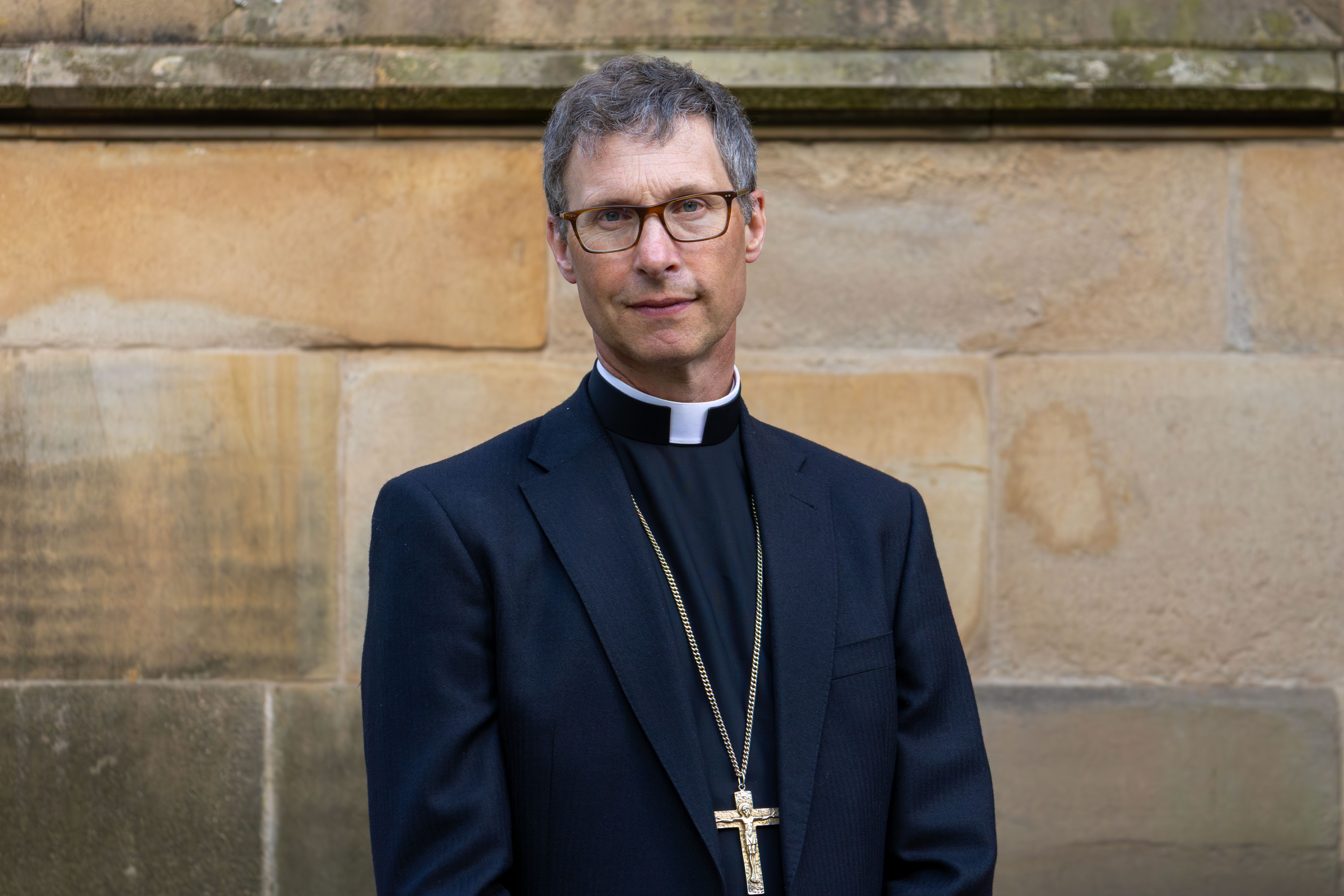 There are no rules for a presidential address. So I hope I am not pushing Synod’s patience too far if, rather than reflecting theologically or addressing a particular theme, I use this short slot for a series of updates.
First, Kenya. Our Diocese has a series of linked Dioceses, many of which are simply too dangerous for westerners to visit. So in January we gathered the bishops of four of those dioceses at a neutral space to which all had permission to travel. We met at the Anglican Church of Kenya retreat house in Nairobi.
What a city that is! Vast, chaotic, vibrant, alive and wholly unpredictable. It is a place both of eye-watering poverty and staggering wealth. Some parts seem almost derelict, others parts are sites of enormous infrastructural development.
One of the highlights for me was visiting a string of projects in the informal housing settlements which are part funded by Christian Aid, many using simple techniques to empower people who are living on less than a dollar a day. For example ‘Imarisha Kilimo’ or ‘Strength through Agriculture,’ a project that teaches women to grow plants on tiny patches of ground, using the profits to educate their children and to improve family life.
But the main purpose of the visit was to develop the friendships that exists between five Dioceses. Sadly, there is presently no Bishop of Braunschweig so only four of us were there, but the conversation was excellent and the contexts in which my colleagues work both alarming and inspiring.
Bishop Joseph of Liwolo in South Sudan runs a diocese in a war zone, two thirds of his people still living in refugee camps in Uganda. Neither he nor his clergy receive any stipend and the pressures on him are crazy as he seeks to inspire the poorest people on the planet to rebuild their nation. Yet his faith and his trust in the Lord are electrifying and he speaks words of fire.
Bishop Leo of Multan in Pakistan serves a rural area of a majority Muslim country. His churches are alive and growing, but his people suffer from the Blasphemy Laws in Pakistan and from the growing persecution of Christian and other minority groups.
Bishop Dintoe is from Free State, the oldest link for our Diocese and indeed one of the oldest in the Anglican Communion. His diocese still lives with the legacy of Apartheid. Indeed, many white Anglicans left the church when he was elected as the first black Bishop. But his wisdom and care brought so much to our gathering.
Those three bishops shared many of the same concerns. The impact of climate change on the communities they serve and the economic wellbeing of their nation. The scourge of gender-based violence and the need to educate boys and young men, including many within the Church, on how to manage anger.
The impact of corrupt government and self-serving politicians in preventing nations from lifting themselves out of poverty. And for Joseph, the enduring chaos of South Sudan and the negative impact of Ugandan interference.
It made me realise how domestic we can be in the Church of England, how insular we can be in our concerns and priorities and how we have lost our voice in the public square.
We need to recover our prophetic voice as Christians, we need to be bolder in speaking up for the values that matter to us, we need to be more ready to engage with government and those in power as we live the kingdom of God today.
But the chief way in which these Bishops from the global south inspire is through their profound faith in Jesus Christ and their belief in the power of prayer. Faith that has been tested by prejudice, persecution and conflict is like faith that has been through the refiner’s fire and we have so much to learn.
We spent time thinking about how we can develop our relationship and a letter will soon be coming out from all four of us with ideas and suggestions. We need to make a friendship between bishops into a friendship between dioceses without contributing to the climate change by constantly climbing abroad planes. But my time in Nairobi has been a precious glimpse of just how important our global partnerships in the Gospel are.
Second, Vision 2026 and beyond. We have commenced a process to evaluate the impact of Vision 2026 as we prepare to say farewell to a strategy that has had such a big impact in the Diocese over the past ten years. It does not formally end until the day we launch the new Vision, Joyful Followers of Jesus, on November 14th 2026.
But now is the time to do the learning. God has used Vision 2026 in extraordinary ways. The Fruitful app, the Lent and Advent devotionals, over 200 new congregations, three major SDF projects, the ALM scheme, M:Power, increased engagement with ministry to children and young people and perhaps most spectacularly the £25.5m investment in mission from the Strategic Mission and Ministry Board.
And whilst the Vision has not led to the net growth in church attendance that we have prayed for, it is intriguing that over the past five years we have been on an upward trajectory with 3.7% growth in regular weekly attendance in 2025. That is around 500 people, following our Year of Prayer for Growth and Renewal.
In terms of our new vision, we are now at crucial phase of moving from the ‘what’ to the ‘how’ and our next Synod meeting in July will be one of the most critical for our diocese for many years. Don’t miss it!
Third, centenary. Happy Birthday! I am really delighted that the emphasis in most parishes is on using our centenary as a springboard for the mission. We rejoice in the past hundred years, but we look forward to the next hundred with joy and with optimism.
The energy going into planning mission weekends in September is especially good to see. Thank you for grabbing hold of this opportunity in just the right way, and see you in Blackpool on May 16th!
Fourth, the Church of England. I have written to Archbishop Sarah Mullally to assure her of our love and prayers as she prepares to be enthroned as Archbishop of Canterbury on March 26th. The challenges she will meet in that role are formidable. I am deeply aware of the profound hurt that the Living in Love and Faith process has had on many people across our diocese for various reasons and we seem to have ended up in a place where nobody is happy.
But the way in which we hold a Church together is not through endless processes and management techniques but by keeping our eyes on Jesus and declaring his saving work with confidence to the world. My prayer is that the new Archbishop will bring fresh confidence to our proclamation, work to renew parish life and will seek to use her role to recapture the imaginations of our nation with the work and person of Jesus Christ.
And finally therefore, the Parish. The Parish system is the way we share the good news of Jesus Christ in the Church of England. There is no plan B. That is why everything we do in the Diocese of Blackburn is about the renewal of Parish life.
It has been so exciting to see the impact of the Diocesan Renewal Programme, of our new congregations and of our discipleship and evangelism resources in supporting parish renewal. It has also been wonderful to receive a huge gift of love from the Diocese of Gloucester recently who, wishing to share their inherited resource, have enabled us to fund two pioneering posts in communities where church life is weak or non-existent.
But above all I want to thank God for our clergy for the purposeful and dedicated ministry they offer. It makes me very proud to serve as Bishop in a Diocese with such outstanding leaders.
In my view the biggest threat we now face is not financial, it is vocations and it is recruitment. Please pray for the Lord to send labourers into the white harvest fields of Lancashire. We need clergy of all traditions who love the lord Jesus and love to make him known.
And thank you to each of you, lay and ordained, for all you do to serve Jesus and his Church. Yor service your ministry, your dedication matters massively. For as my colleagues in Nairobi reminded me constantly, the world’s only hope is Jesus.
Bishop Philip North, March 2026